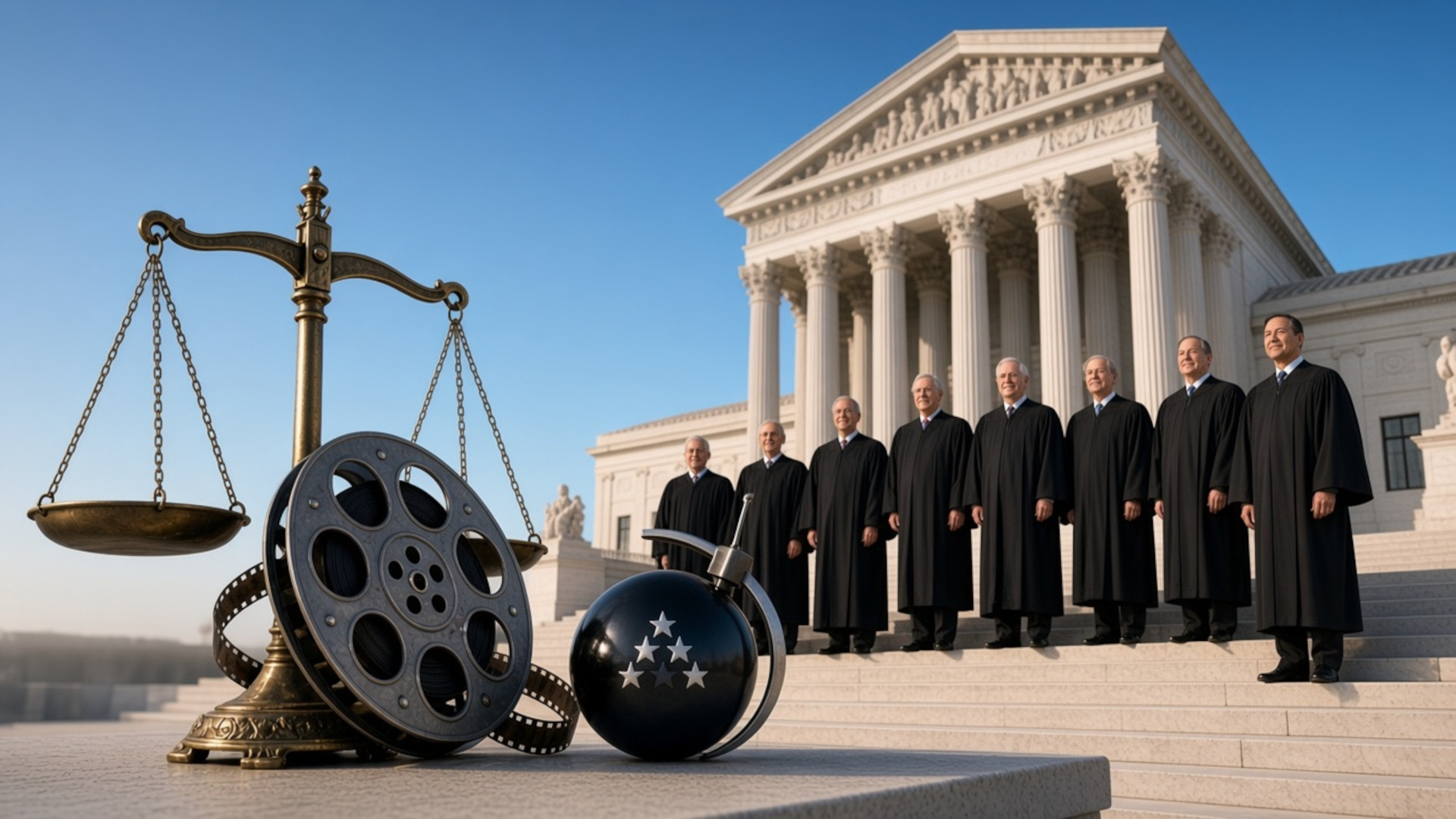

We were warned. Many people told us that all of the coddling, helicopter parenting, and focus on people's self-esteem would lead to men and women who would never grow up. Today, it appears we not only have a generation of Infantile Americas, but a political class of them as well. For decades, the progressive movement has used the courts to enforce its agenda. What they could not get through the "democratic process", they got the courts to do for them, claimed a right that didn't exist, and threatened anyone who questioned that newfound right. Then along comes the Bruen and Dobbs decisions, both of which involved the court looking at the laws, including the Constitution, and coming to a legally sound decision. And what has been the reaction of the progressive movement and the so called democratic party? Basically, if they don't get what they want they either take their ball and go home, or attempt to change the rules. In other words, they throw a political temper tantrum. How should rational, reasonable, adult Americans deal with these emotional infants. Pretty much the way you deal with a child throwing a temper tantrum in the grocery store, you ignore the tantrum and make them follow the rules.
Today, I want to start by looking to the New York State Rifle and Pistol Association v. Bruen case, and how these infantile Americans are dealing with it. - Live 4PM ET with Host Paul Engel @CyberEngelLIVE http://rdo.to/TALKLOUD
iHEART RADIO http://bit.ly/2mBrCxE
@MalcolmOutLoud.


Who is in charge of your children? That has been a perennial question that has grown in importance over the last few years. When I was a child, it was understood that, with rare exceptions, parents were in charge of a child’s upbringing. This included medical, religious, and educational decisions. However, over the last few decades, the role of the parent in these decisions has been replaced by experts. What happens when the goal of the experts differs from those of the parents? Who decides the future of the rising generations? It was understood that the state acted in loco parentis, in place of the parents, only for the safety of the child. A recent case in U.S. District Court shows that be it health departments, child services, schools, or even the courts. Government not only believes they know better than the parents, they are more than willing to act in loco parentis tyrannis.
https://constitutionstudy.com/?p=8897
With the release of ChatGPT and other artificial intelligence (AI) applications, there has been a lot of speculation and downright assertions about our future. With over 30 years of experience in Information Technology (IT), not more than a passing understanding of AIs, I've come to the conclusion that much of what I've heard is more science fiction than fact. A recent court case decided in the D.C. District Court revolved around one very important question. Do AIs have rights?
In this third installment of the three-part series on the branches of government, we look at the role of the third and weakest branch. At least that is what our Founding Fathers thought of it. What is the role of the federal judiciary? What are the extent of their powers, how do they related to the other two branches of government, and why is a proper understanding of the role of the judiciary critical if the United States is to remain a constitutional republic?
https://constitutionstudy.com/?p=8575
I don’t know which is worse, the legalized theft by the federal government or their incompetent mismanagement of their finances. I’d love to blame those in government for this mess, but We the People hired them, and we keep renewing their contract. - Live 4PM ET with Host Paul Engel @CyberEngel @OutLoudNews
LIVE http://rdo.to/TALKLOUD
iHEART RADIO http://bit.ly/2mBrCxE
The Preamble to the Constitution points out it’s purpose, to create a more perfect union, establish justice, and insure domestic tranquility. How would you rate the union today? - Live 4PM ET with Host Paul Engel @CyberEngel @OutLoudNews
LIVE http://rdo.to/TALKLOUD
iHEART RADIO http://bit.ly/2mBrCxE
The Fourth Amendment protects your papers, but what about other documents? What about information collected about you as you go through your life. They're not your papers, neither are they your effects, and therefore do not fall under Fourth Amendment protections. While Congress has tried a patchwork solution, there always seems to be one more way to spy on you. In this case, it's about spying on your viewing history.
https://constitutionstudy.com/2026/11/23/550-video-privacy-argued-at-scotus/