

President Joe Biden’s administration is refusing to address why it’s focusing efforts on arresting pro-life activists amid national outcry over dozens of attacks on pro-life centers and churches.
At least 86 Catholic churches and 74 pregnancy resource centers and pro-life organizations have been attacked since the May leak of the draft Supreme Court opinion overturning Roe v. Wade, according to a Catholic Vote tracker. Many of these buildings have been vandalized with threats such as “If abortions aren’t safe, neither are you.”

Who is in charge of your children? That has been a perennial question that has grown in importance over the last few years. When I was a child, it was understood that, with rare exceptions, parents were in charge of a child’s upbringing. This included medical, religious, and educational decisions. However, over the last few decades, the role of the parent in these decisions has been replaced by experts. What happens when the goal of the experts differs from those of the parents? Who decides the future of the rising generations? It was understood that the state acted in loco parentis, in place of the parents, only for the safety of the child. A recent case in U.S. District Court shows that be it health departments, child services, schools, or even the courts. Government not only believes they know better than the parents, they are more than willing to act in loco parentis tyrannis.
https://constitutionstudy.com/?p=8897
With the release of ChatGPT and other artificial intelligence (AI) applications, there has been a lot of speculation and downright assertions about our future. With over 30 years of experience in Information Technology (IT), not more than a passing understanding of AIs, I've come to the conclusion that much of what I've heard is more science fiction than fact. A recent court case decided in the D.C. District Court revolved around one very important question. Do AIs have rights?
In this third installment of the three-part series on the branches of government, we look at the role of the third and weakest branch. At least that is what our Founding Fathers thought of it. What is the role of the federal judiciary? What are the extent of their powers, how do they related to the other two branches of government, and why is a proper understanding of the role of the judiciary critical if the United States is to remain a constitutional republic?
https://constitutionstudy.com/?p=8575
James Madison wrote in Federalist #47 about the dangers of an accumulation of powers. Even a cursory look at politics in the United States shows We the People did not heed Madison’s warning. - Live 4PM ET with Host Paul Engel @CyberEngel @OutLoudNews
LIVE http://rdo.to/TALKLOUD
iHEART RADIO http://bit.ly/2mBrCxE
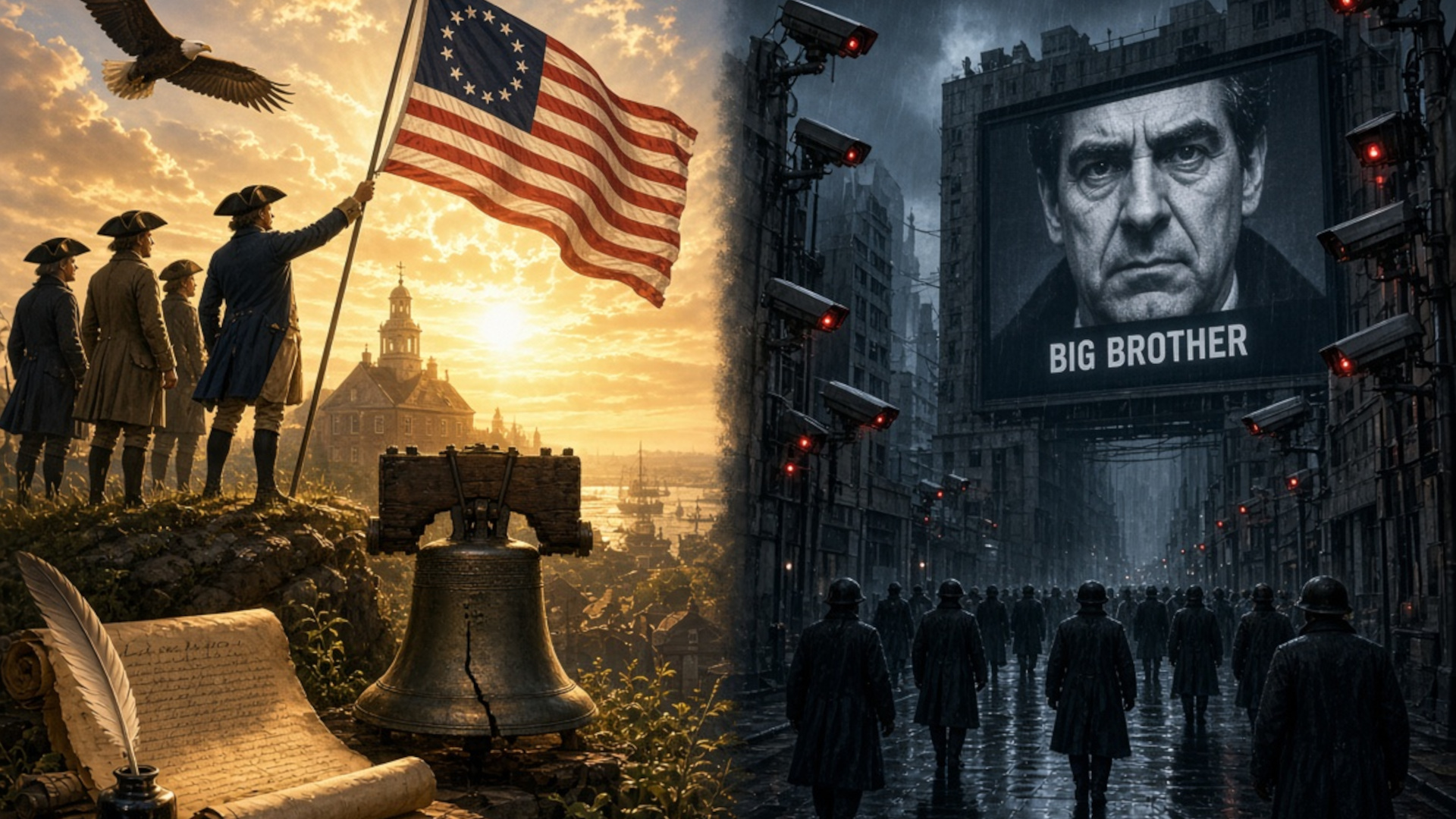
In 1776, Thomas Jefferson wrote some of the most famous words in American history. In 1949, George Orwell wrote the novel 1984, warning of a dystopian future. The question I have is, will the future of the United States of America be the Spirit of 1776 or the Spirit of 1984?
https://constitutionstudy.com/2026/10/12/544-spirit-of-1776-or-1984/
Some of us remember to good old days of the family doctor, house-calls, and reasonable medical advice. Now, with governments in charge of our healthcare, even those ideas are all but extinct. - Live 4PM ET with Host Paul Engel @CyberEngel @OutLoudNews
LIVE http://rdo.to/TALKLOUD
iHEART RADIO http://bit.ly/2mBrCxE