

Every New Year, people look forward, hoping things will get better. And at the end of pretty much every year, they’re disappointed. Have you ever considered why? Many of the people I’ve been talking to lately have hope because they believe someone will come forward and fix whatever problem is utmost in their minds.
Some think that with the Republicans controlling the House of Representatives, they’ll make things better. Other are placing their hope in the fact that the Democrats now have a majority in the Senate. Some see changes in state or local governments as the source of, if not salvation, at least an improvement.
Meanwhile, others are looking to the courts, especially with a new justice on the Supreme Court, as a ray of hope for the future. By taking a look at what’s been going on lately, and what laws are going into effect in this new year, maybe we can get a better idea of what, if anything, will truly get better in 2023.
https://www.americaoutloud.com/new-year-how-to-fix-the-same-problems/

Who is in charge of your children? That has been a perennial question that has grown in importance over the last few years. When I was a child, it was understood that, with rare exceptions, parents were in charge of a child’s upbringing. This included medical, religious, and educational decisions. However, over the last few decades, the role of the parent in these decisions has been replaced by experts. What happens when the goal of the experts differs from those of the parents? Who decides the future of the rising generations? It was understood that the state acted in loco parentis, in place of the parents, only for the safety of the child. A recent case in U.S. District Court shows that be it health departments, child services, schools, or even the courts. Government not only believes they know better than the parents, they are more than willing to act in loco parentis tyrannis.
https://constitutionstudy.com/?p=8897
With the release of ChatGPT and other artificial intelligence (AI) applications, there has been a lot of speculation and downright assertions about our future. With over 30 years of experience in Information Technology (IT), not more than a passing understanding of AIs, I've come to the conclusion that much of what I've heard is more science fiction than fact. A recent court case decided in the D.C. District Court revolved around one very important question. Do AIs have rights?
In this third installment of the three-part series on the branches of government, we look at the role of the third and weakest branch. At least that is what our Founding Fathers thought of it. What is the role of the federal judiciary? What are the extent of their powers, how do they related to the other two branches of government, and why is a proper understanding of the role of the judiciary critical if the United States is to remain a constitutional republic?
https://constitutionstudy.com/?p=8575
I don’t know which is worse, the legalized theft by the federal government or their incompetent mismanagement of their finances. I’d love to blame those in government for this mess, but We the People hired them, and we keep renewing their contract. - Live 4PM ET with Host Paul Engel @CyberEngel @OutLoudNews
LIVE http://rdo.to/TALKLOUD
iHEART RADIO http://bit.ly/2mBrCxE

The Preamble to the Constitution points out it’s purpose, to create a more perfect union, establish justice, and insure domestic tranquility. How would you rate the union today? - Live 4PM ET with Host Paul Engel @CyberEngel @OutLoudNews
LIVE http://rdo.to/TALKLOUD
iHEART RADIO http://bit.ly/2mBrCxE

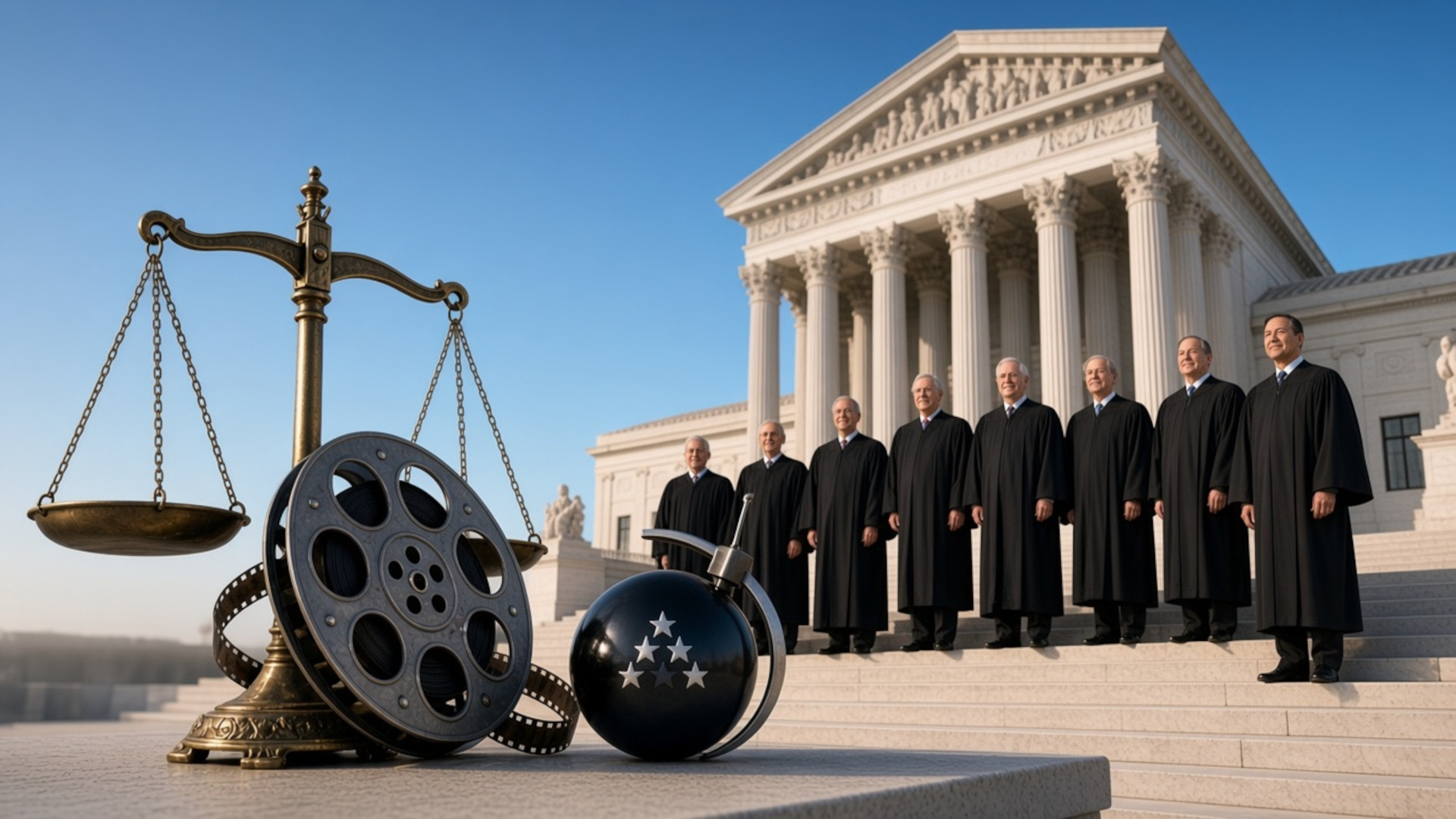
The Fourth Amendment protects your papers, but what about other documents? What about information collected about you as you go through your life. They're not your papers, neither are they your effects, and therefore do not fall under Fourth Amendment protections. While Congress has tried a patchwork solution, there always seems to be one more way to spy on you. In this case, it's about spying on your viewing history.
https://constitutionstudy.com/2026/11/23/550-video-privacy-argued-at-scotus/