

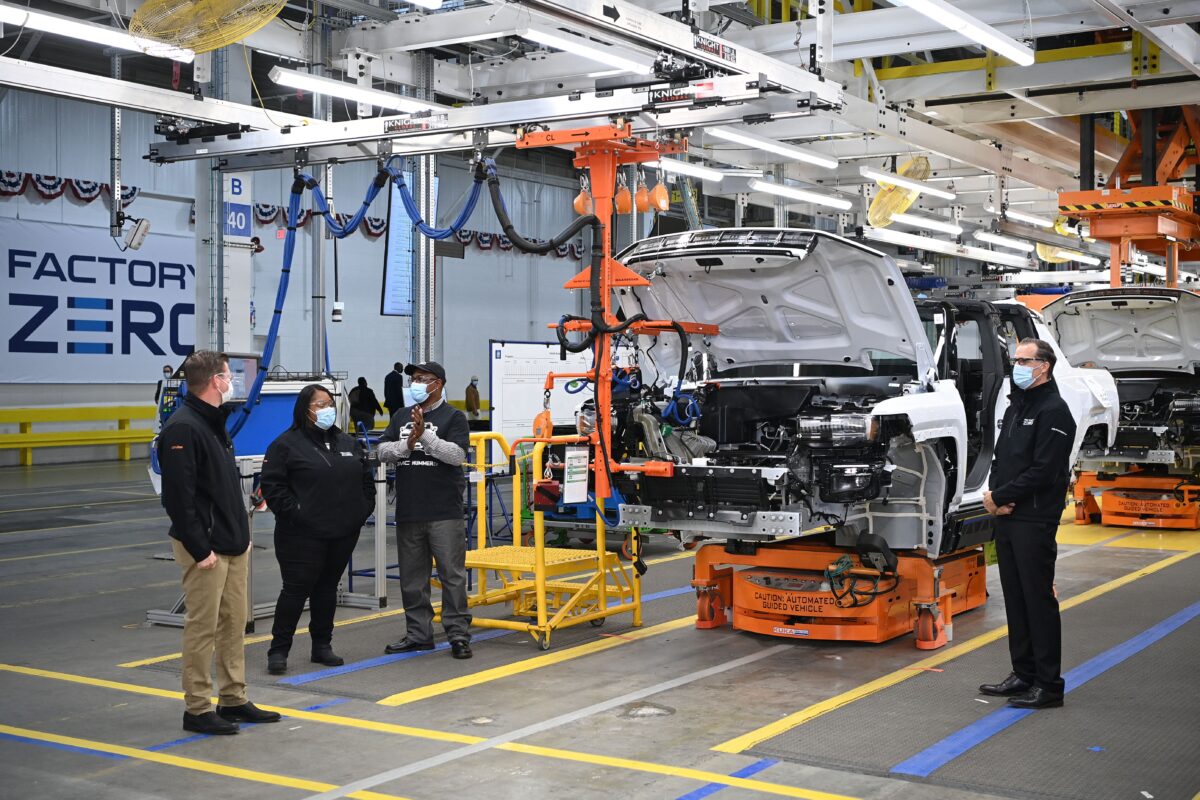
The Biden administration’s tax credits for electric vehicles (EV) could end up costing taxpayers four times more than earlier estimates, with multiple manufacturers set to collect billions in such credits over upcoming years.
Among the many tax rebates in the Inflation Reduction Act (IRA) passed last year, one is specifically aimed at electric battery manufacturing. For each kilowatt-hour of U.S.-manufactured cell, a company will get tax credits worth $35. This is expected to cut down battery production costs in the country by a third.
An estimate made by the Congressional Budget Office (CBO) in August last year foresaw tax revenues lost from these tax credits amounting to $30.6 billion over a period of 10 years, with the figure including credits for solar and wind manufacturing as well.
Who is in charge of your children? That has been a perennial question that has grown in importance over the last few years. When I was a child, it was understood that, with rare exceptions, parents were in charge of a child’s upbringing. This included medical, religious, and educational decisions. However, over the last few decades, the role of the parent in these decisions has been replaced by experts. What happens when the goal of the experts differs from those of the parents? Who decides the future of the rising generations? It was understood that the state acted in loco parentis, in place of the parents, only for the safety of the child. A recent case in U.S. District Court shows that be it health departments, child services, schools, or even the courts. Government not only believes they know better than the parents, they are more than willing to act in loco parentis tyrannis.
https://constitutionstudy.com/?p=8897
With the release of ChatGPT and other artificial intelligence (AI) applications, there has been a lot of speculation and downright assertions about our future. With over 30 years of experience in Information Technology (IT), not more than a passing understanding of AIs, I've come to the conclusion that much of what I've heard is more science fiction than fact. A recent court case decided in the D.C. District Court revolved around one very important question. Do AIs have rights?
In this third installment of the three-part series on the branches of government, we look at the role of the third and weakest branch. At least that is what our Founding Fathers thought of it. What is the role of the federal judiciary? What are the extent of their powers, how do they related to the other two branches of government, and why is a proper understanding of the role of the judiciary critical if the United States is to remain a constitutional republic?
https://constitutionstudy.com/?p=8575
We all have secrets, things we don’t want generally known. How do we keep secrets in our modern digital world? - Live 4PM ET with Host Paul Engel @CyberEngel @OutLoudNews
LIVE http://rdo.to/TALKLOUD
iHEART RADIO http://bit.ly/2mBrCxE

What is the ultimate sanction for criminal behavior? A recent failed execution in Tennessee has brought this topic front and center. What are the issues from a constitutional standpoint? - Live 4PM ET with Host Paul Engel @CyberEngel @OutLoudNews
LIVE http://rdo.to/TALKLOUD
iHEART RADIO http://bit.ly/2mBrCxE

We’ve all seen the statue justice, with her blindfold and scale. What happens when people make or apply rules for some but not for others? - Live 4PM ET with Host Paul Engel @CyberEngel @OutLoudNews
LIVE http://rdo.to/TALKLOUD
iHEART RADIO http://bit.ly/2mBrCxE