
“The Department of Education shall terminate on December 31, 2023.”
That one sentence is the total text of HR 899, a bill authored by Representative Thomas Massie (R-Ky.) and co-sponsored by 20 of his colleagues, all of whom are Republicans.
Massie introduced this version of the bill on February 14. Two years ago, he introduced the same bill, using the same language.
“Unelected bureaucrats in Washington, D.C. should not be in charge of our children’s intellectual and moral development,” Massie said in a press release in 2021 when he offered the bill last time. “States and local communities are best positioned to shape curricula that meet the needs of their students. Schools should be accountable. Parents have the right to choose the most appropriate educational opportunity for their children, including home school, public school, or private school.”
https://thenewamerican.com/bill-to-abolish-dept-of-education-gaining-sponsors/

Who is in charge of your children? That has been a perennial question that has grown in importance over the last few years. When I was a child, it was understood that, with rare exceptions, parents were in charge of a child’s upbringing. This included medical, religious, and educational decisions. However, over the last few decades, the role of the parent in these decisions has been replaced by experts. What happens when the goal of the experts differs from those of the parents? Who decides the future of the rising generations? It was understood that the state acted in loco parentis, in place of the parents, only for the safety of the child. A recent case in U.S. District Court shows that be it health departments, child services, schools, or even the courts. Government not only believes they know better than the parents, they are more than willing to act in loco parentis tyrannis.
https://constitutionstudy.com/?p=8897
With the release of ChatGPT and other artificial intelligence (AI) applications, there has been a lot of speculation and downright assertions about our future. With over 30 years of experience in Information Technology (IT), not more than a passing understanding of AIs, I've come to the conclusion that much of what I've heard is more science fiction than fact. A recent court case decided in the D.C. District Court revolved around one very important question. Do AIs have rights?
In this third installment of the three-part series on the branches of government, we look at the role of the third and weakest branch. At least that is what our Founding Fathers thought of it. What is the role of the federal judiciary? What are the extent of their powers, how do they related to the other two branches of government, and why is a proper understanding of the role of the judiciary critical if the United States is to remain a constitutional republic?
https://constitutionstudy.com/?p=8575
With the beginning of their new term, the justices of the Supreme Court are not only back in town, but they’ve hit the ground running. - Live 4PM ET with Host Paul Engel @CyberEngel @OutLoudNews
LIVE http://rdo.to/TALKLOUD
iHEART RADIO http://bit.ly/2mBrCxE
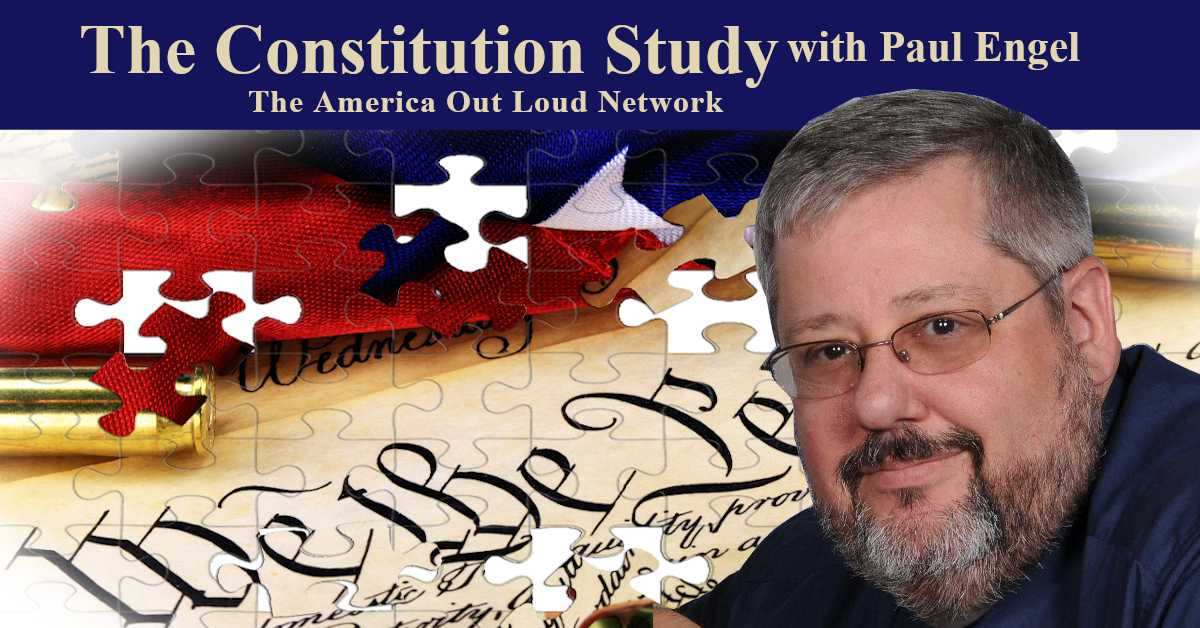
A lot of people have it out for Automatic License Plate Readers, especially Flock Safety. In the case USA v. Meilisa Susan Kyle, Flock Safety did not violate Ms. Kyle’s rights, the Sheriff’s Deputy did.
https://constitutionstudy.com/2026/10/26/546-its-not-flocks-fault/
There are a lot of people with opinions about why things are the way they are. What I’ve found is, the answer is rarely as simple as We the People would like to believe. - Live 4PM ET with Host Paul Engel @CyberEngel @OutLoudNews
LIVE http://rdo.to/TALKLOUD
iHEART RADIO http://bit.ly/2mBrCxE