


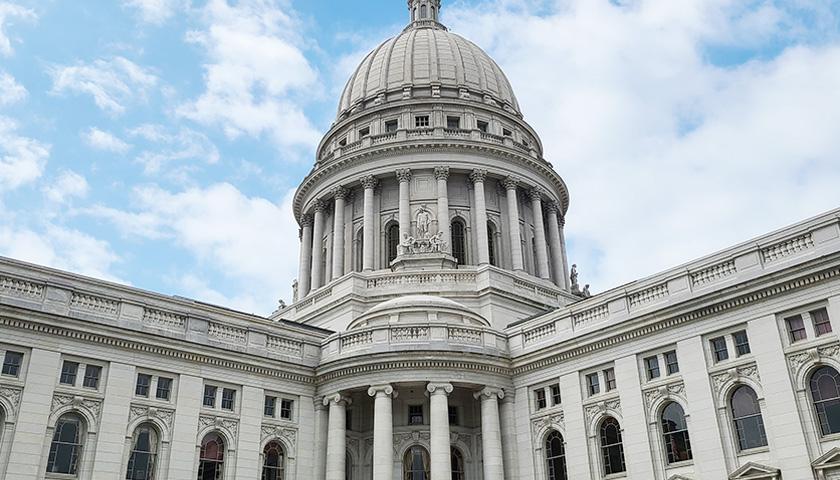
Wisconsin Senators want to take away a strategy that some local governments have used to keep public information under wraps.
The State Senate on Wednesday approved SB 117, also known as The Open Government Protection Act, with a simple voice vote. The legislation would force local governments to pay the legal fees of people who sue over open records requests, even if the local government doesn’t technically lose the case.
“The Wisconsin Supreme Court decided in 2022 that a requester prevails in whole or in substantial part only if the requester obtains a judicially sanctioned change in the parties’ legal relationship,” the Legislative Reference Bureau explained in the legislation. “Under the supreme court’s decision, a requester generally is not entitled to attorney fees and costs if the authority voluntarily or unilaterally without a court order provides contested records after the requester files an action in court.”
Who is in charge of your children? That has been a perennial question that has grown in importance over the last few years. When I was a child, it was understood that, with rare exceptions, parents were in charge of a child’s upbringing. This included medical, religious, and educational decisions. However, over the last few decades, the role of the parent in these decisions has been replaced by experts. What happens when the goal of the experts differs from those of the parents? Who decides the future of the rising generations? It was understood that the state acted in loco parentis, in place of the parents, only for the safety of the child. A recent case in U.S. District Court shows that be it health departments, child services, schools, or even the courts. Government not only believes they know better than the parents, they are more than willing to act in loco parentis tyrannis.
https://constitutionstudy.com/?p=8897
With the release of ChatGPT and other artificial intelligence (AI) applications, there has been a lot of speculation and downright assertions about our future. With over 30 years of experience in Information Technology (IT), not more than a passing understanding of AIs, I've come to the conclusion that much of what I've heard is more science fiction than fact. A recent court case decided in the D.C. District Court revolved around one very important question. Do AIs have rights?
In this third installment of the three-part series on the branches of government, we look at the role of the third and weakest branch. At least that is what our Founding Fathers thought of it. What is the role of the federal judiciary? What are the extent of their powers, how do they related to the other two branches of government, and why is a proper understanding of the role of the judiciary critical if the United States is to remain a constitutional republic?
https://constitutionstudy.com/?p=8575
John Jay said we should teach the rising generation to be free. From Paris to California, it appears we’re teaching the rising generation something… just not to be free. - Live 4PM ET with Host Paul Engel @CyberEngel @OutLoudNews
LIVE http://rdo.to/TALKLOUD
iHEART RADIO http://bit.ly/2mBrCxE

Caveat emptor means “let the buyer beware”. This axiom has been good advice since it was used in a 1603 court case in England. What happens when the buyer decides to let the government beware for them. What are the dangers of caveat gubernatio? - Live 4PM ET with Host Paul Engel @CyberEngel @OutLoudNews
LIVE http://rdo.to/TALKLOUD
iHEART RADIO http://bit.ly/2mBrCxE

The Fourth through Eighth Amendments to the Constitution are called the Due Process Amendments. In todays world, it appears We the People must search in order to find Due Process. - Live 4PM ET with Host Paul Engel @CyberEngel @OutLoudNews
LIVE http://rdo.to/TALKLOUD
iHEART RADIO http://bit.ly/2mBrCxE