


As Tennessee’s legislature wrapped up year one of the 113th General Assembly on Friday, they did so without taking up gun legislation called to be enacted by state Democrats and Republican Gov. Bill Lee.
There wasn’t a lack of time, as many more days were allotted to finish the state’s business. The House clerk told the legislature last week that between the two years, the legislature had 90 days to be in session—with the state House using 27 and the Senate using 32 this year.
Less than two hours after both chambers gaveled out of session until January 2024, Lee used his authority to call the legislature into a special session to specifically discuss gun laws.

Who is in charge of your children? That has been a perennial question that has grown in importance over the last few years. When I was a child, it was understood that, with rare exceptions, parents were in charge of a child’s upbringing. This included medical, religious, and educational decisions. However, over the last few decades, the role of the parent in these decisions has been replaced by experts. What happens when the goal of the experts differs from those of the parents? Who decides the future of the rising generations? It was understood that the state acted in loco parentis, in place of the parents, only for the safety of the child. A recent case in U.S. District Court shows that be it health departments, child services, schools, or even the courts. Government not only believes they know better than the parents, they are more than willing to act in loco parentis tyrannis.
https://constitutionstudy.com/?p=8897
With the release of ChatGPT and other artificial intelligence (AI) applications, there has been a lot of speculation and downright assertions about our future. With over 30 years of experience in Information Technology (IT), not more than a passing understanding of AIs, I've come to the conclusion that much of what I've heard is more science fiction than fact. A recent court case decided in the D.C. District Court revolved around one very important question. Do AIs have rights?
In this third installment of the three-part series on the branches of government, we look at the role of the third and weakest branch. At least that is what our Founding Fathers thought of it. What is the role of the federal judiciary? What are the extent of their powers, how do they related to the other two branches of government, and why is a proper understanding of the role of the judiciary critical if the United States is to remain a constitutional republic?
https://constitutionstudy.com/?p=8575
It seems that every two years we’re told this is the most important election in our lifetime. While that is rarely true, there is more to this upcoming mid-term election than just control of Congress. - Live 4PM ET with Host Paul Engel @CyberEngel @OutLoudNews
LIVE http://rdo.to/TALKLOUD
iHEART RADIO http://bit.ly/2mBrCxE

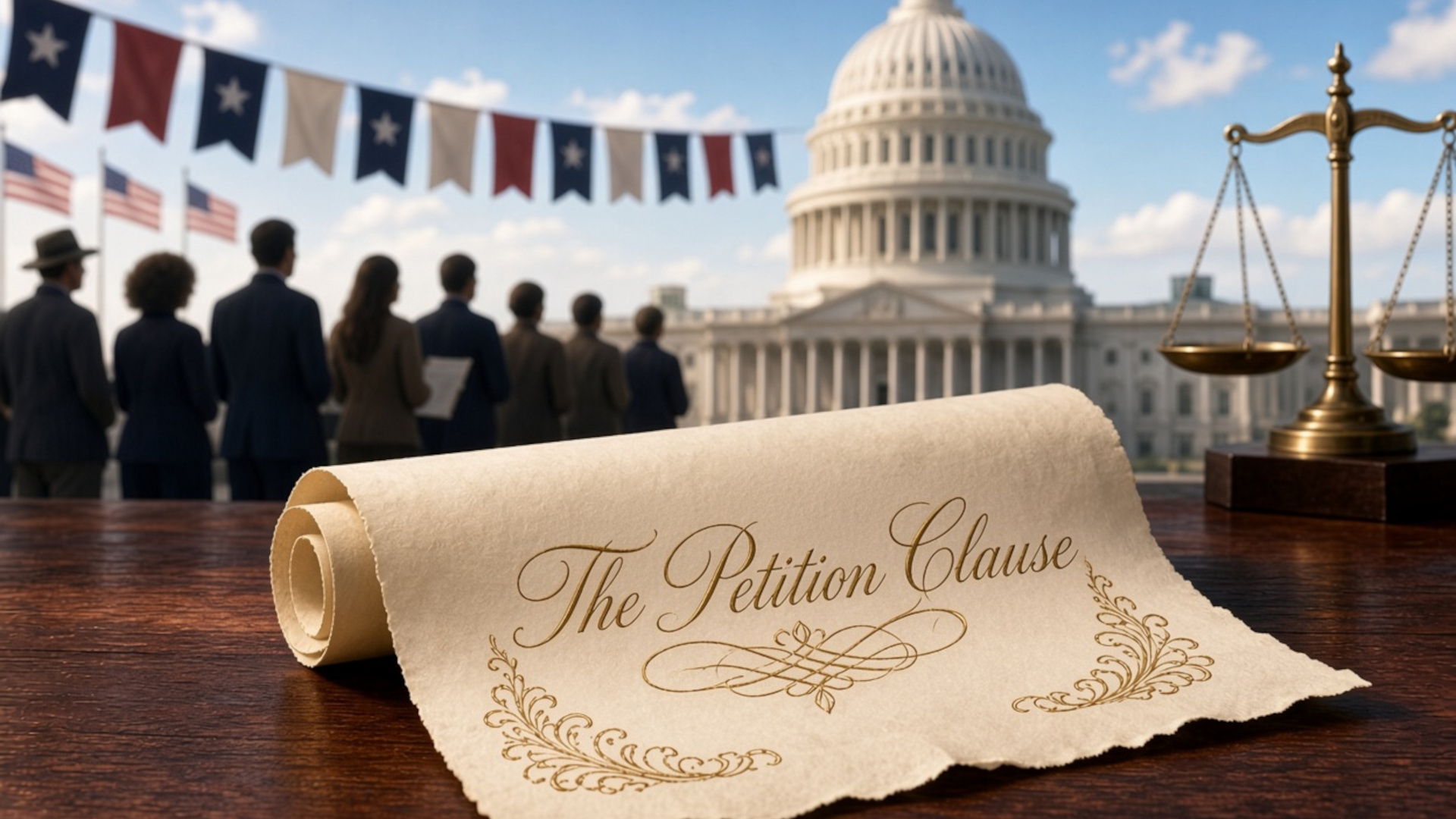
There are plenty of court cases claiming violations of the First Amendment. As I’ve shown, most of those have nothing to do with the First Amendment, but that doesn’t mean Congress doesn’t violate it regularly. Let me introduce you to The Petition Clause.
https://constitutionstudy.com/2026/10/19/544-the-petition-clause/
I don’t know how many times I’ve said this, but it is true, it’s what you know that just ain’t so that really bites you in the back-side. - Live 4PM ET with Host Paul Engel @CyberEngel @OutLoudNews
LIVE http://rdo.to/TALKLOUD
iHEART RADIO http://bit.ly/2mBrCxE